
Risk Management at Muangthai Capital

Why does Muangthai Capital place importance on risk management?
Muangthai Capital Public Company Limited is committed to becoming a world-class organisation. The Company has established a risk management strategy aligned with international principles and practices across its financial business group, supporting sustainable long-term growth and returns for all stakeholder groups.
The Company classifies risk into nine categories
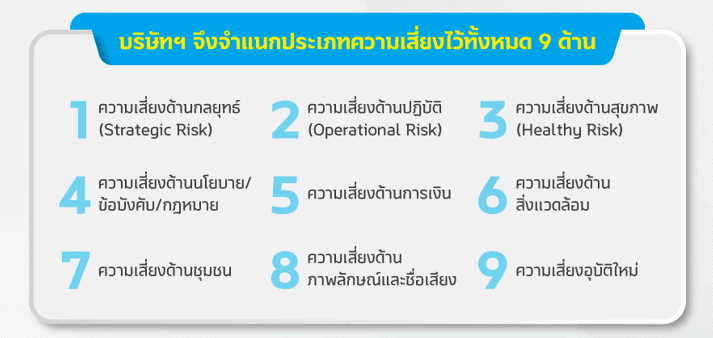
- Strategic Risk
- Operational Risk
- Health Risk
- Policy, Regulatory and Legal Risk
- Financial Risk
- Environmental Risk
- Community Risk
- Image and Reputation Risk
- Emerging Risk
The six-step risk management process
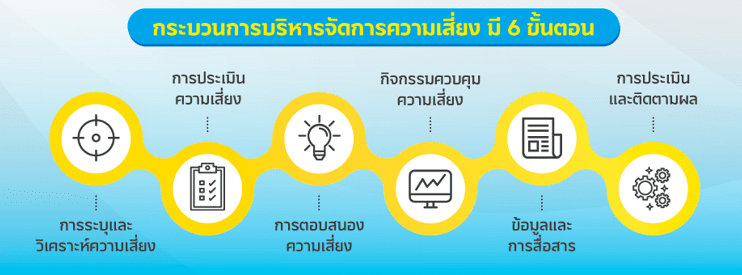
1. Event Identification and Analysis
This is an important step for understanding the causes of risk and identifying events or activities that could cause loss or prevent the organisation from achieving its objectives.
2. Risk Assessment
Existing risk treatments and controls are considered, and the likelihood and impact of the remaining risks are assessed so that the risks can be prioritised.
3. Risk Response
Management plans are established to reduce risk to an acceptable level. One or more risk treatment methods may be selected to reduce the likelihood and impact of an event to within the organisation’s risk tolerance.
4. Control Activities
After an appropriate risk response has been selected, control activities are established to help ensure that the risk is managed appropriately. Each area of operation should have controls suitable and sufficient for the nature of its activities.
5. Information and Communication
Information and communication systems enable management to communicate governance policies and monitor operational results. The organisation therefore needs effective information and communication systems.
6. Monitoring and Review
The Risk Management Committee held two meetings to monitor results and discuss risk issues during the period described in the source article. The Committee continued to monitor progress and observed that the Company had addressed significant risks in several areas, reducing them to levels acceptable to the business. To help limit potential effects on performance or business objectives, the Committee recommended reviewing risk issues so that they remained aligned with current circumstances.